
If you've stood in the bedding aisle, or scrolled a search results page, wondering whether you actually need a mattress protector or a mattress pad, you're not alone. The two names get confused constantly, because they sound like they might do the same thing. They don't. A mattress protector, like the Linenspa Waterproof Mattress Protector I've had on my own bed for months now, exists to guard the mattress underneath it. It's the barrier between spills, sweat, and everyday wear and the actual mattress you paid for. A mattress pad exists for a completely different reason: it's there to change how the bed feels, adding a layer of cushioning on top of a mattress that's gone too firm, too soft, or just tired.
The short version, if you only read one paragraph of this: buy a protector first, always, because it defends the investment underneath it, and many mattress warranties actually require one to stay valid. Add a pad later, only if the mattress itself still feels wrong once the protector is in place. I made the opposite mistake years ago, buying a plush pad before I owned a single protector, and spent an anxious few months tiptoeing around a mattress with zero defense against anything. The Linenspa protector I use now solved that in an afternoon, and it's the one I point people to whenever this exact question comes up.
| Linenspa Mattress Protector | Mattress Pad | |
|---|---|---|
| Primary purpose | Defends the mattress from spills, sweat, and wear | Adds cushioning or changes the feel of the sleep surface |
| Waterproof | Yes, full surface waterproof barrier | Usually no, most pads soak straight through |
| Added cushioning | Minimal, doesn't change firmness | Noticeable, can add an inch or more of loft |
| Effect on mattress feel | Invisible, feels like a fitted sheet | Softens or changes the surface you sleep on |
| Heat retention | Breathable, doesn't trap much heat | Warmer, padding material holds heat |
| Thickness under a fitted sheet | Thin, fitted sheets go on smoothly over it | Bulkier, can make sheets fit tighter or pop off corners |
| Washing | Machine washable and dryer safe | Often needs a larger machine or spot cleaning only |
| Typical cost | Lower cost, roughly the price of a fitted sheet | Higher cost, especially for gel or memory foam pads |
Why the Names Get Confused
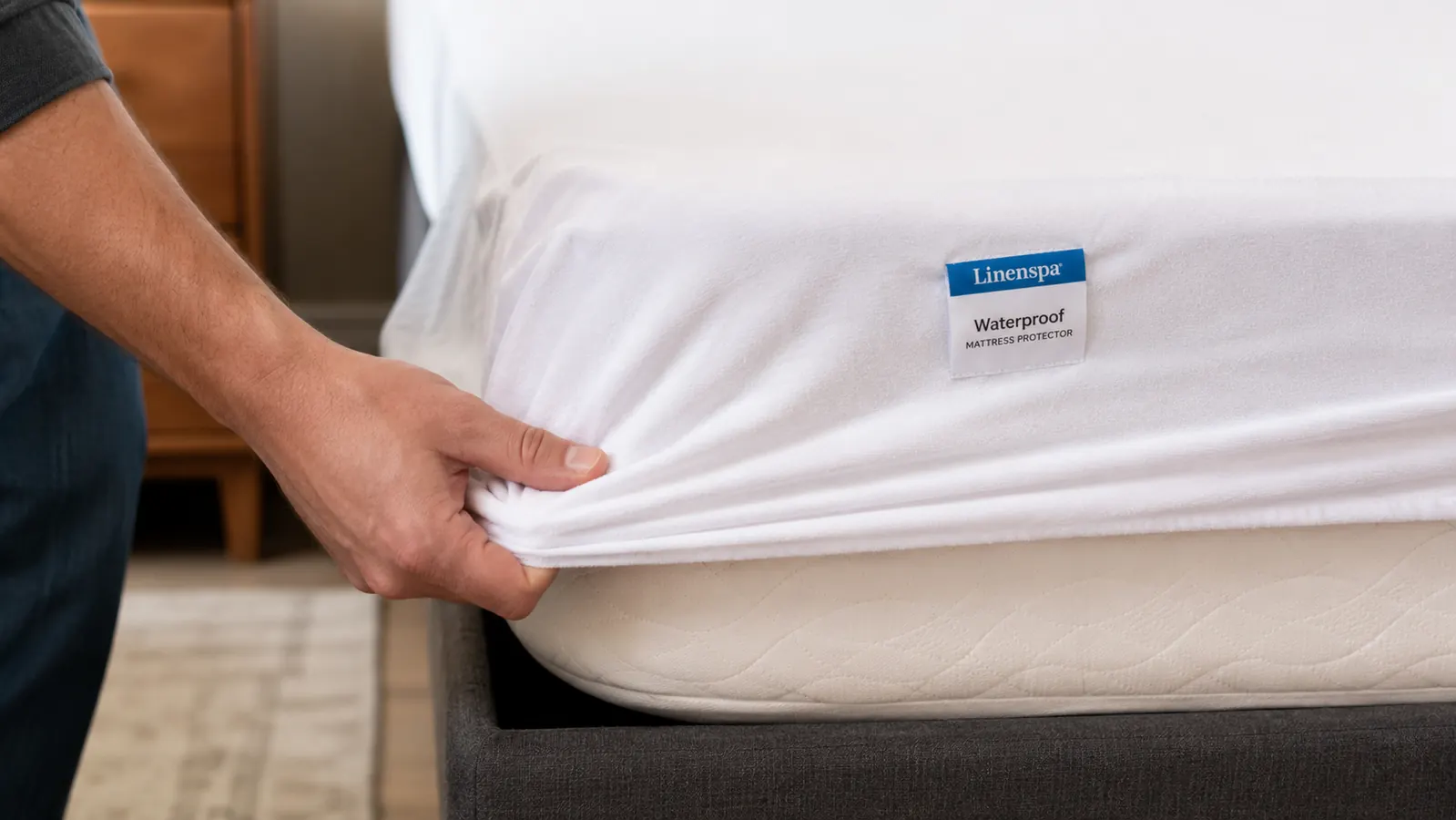
Part of the confusion is that manufacturers use the words loosely. Some brands slap 'pad' on a product that's mostly waterproofing with a thin layer of padding stitched in, and some 'protectors' have enough quilted texture to feel pad-like. The reliable way to tell them apart isn't the label, it's the job. Ask what the product is built to stop, liquid, sweat, general wear, and that's a protector. Ask what it's built to add, softness, loft, a different sleep feel, and that's a pad. The Linenspa protector I tested is unambiguous on this point. It's fitted like a sheet, waterproof at the surface, and thin enough that it doesn't change how the mattress feels at all.
I keep both categories straight in my house by thinking of the protector as insurance and the pad as comfort. Insurance you buy regardless of how you feel about the product, because the day you need it, a spilled glass of water, a sweaty night after a late shift, a warm room in July, is the day you're glad it was already on the bed. Comfort you buy only when something is actually bothering you about how the mattress feels under your body. If you're reading this before you own either one, start with insurance. I've written more about wearing the Linenspa in daily for half a year in my long-term review, and covered the stuff that surprised me in my honest review if you want the unfiltered version.
How I Tested This in My Own Home
I don't review anything I haven't slept on for weeks at minimum, and the Linenspa protector has been on my bed for months at this point, not days. I put it directly against a mattress that was about three years old when I started, ran it through a normal week of use, then intentionally tested the thing everyone actually worries about. I set a full glass of water on the corner overnight to see if it would seep through by morning. It didn't. The surface beaded the water and I wiped it dry before it ever reached the fabric layer underneath, let alone the mattress itself. Since then I've had two real accidental spills, a knocked-over mug and a spilled water bottle, and both wiped clean without a trace reaching the mattress.
I also wanted to know what months of regular washing does to the waterproof layer, since that's where cheaper protectors tend to fail first. Some budget waterproof fabrics start to crackle or peel at the seams after a handful of wash cycles, which quietly stops protecting anything even though the protector still looks fine spread across the bed. Mine has gone through more than a dozen washes on a normal cycle, air dried a few times and machine dried the rest, and the waterproof layer still beads water the same way it did on day one. That's the test that actually matters, not how a product performs straight out of the box, but how it holds up after a season of real use.
Where the Linenspa Protector Wins
The protector wins on anything involving risk. It's fully waterproof at the surface layer, which matters more than people expect, not just for spills but for night sweats, which is the complaint I hear most from people who run hot or keep irregular hours and end up sleeping at odd times when the room hasn't cooled down yet. Machine washable and dryer safe means it survives the wash it inevitably needs, and mine has gone through the laundry more than a dozen times without the waterproof layer cracking or peeling, which is the failure mode I've seen with cheaper protectors that start flaking after a few washes.
It also wins on invisibility. Because it's thin and fitted like a sheet, it doesn't change the feel of the mattress at all, no crinkle sound underneath you, no plastic feel against skin, nothing that makes a partner ask what's different about the bed. A mattress pad, by contrast, is designed to be felt. That's not a flaw, it's the entire point of a pad, but it means a protector is the safer starting choice for anyone who already likes their mattress and just wants it defended, not altered.
Where a Mattress Pad Wins
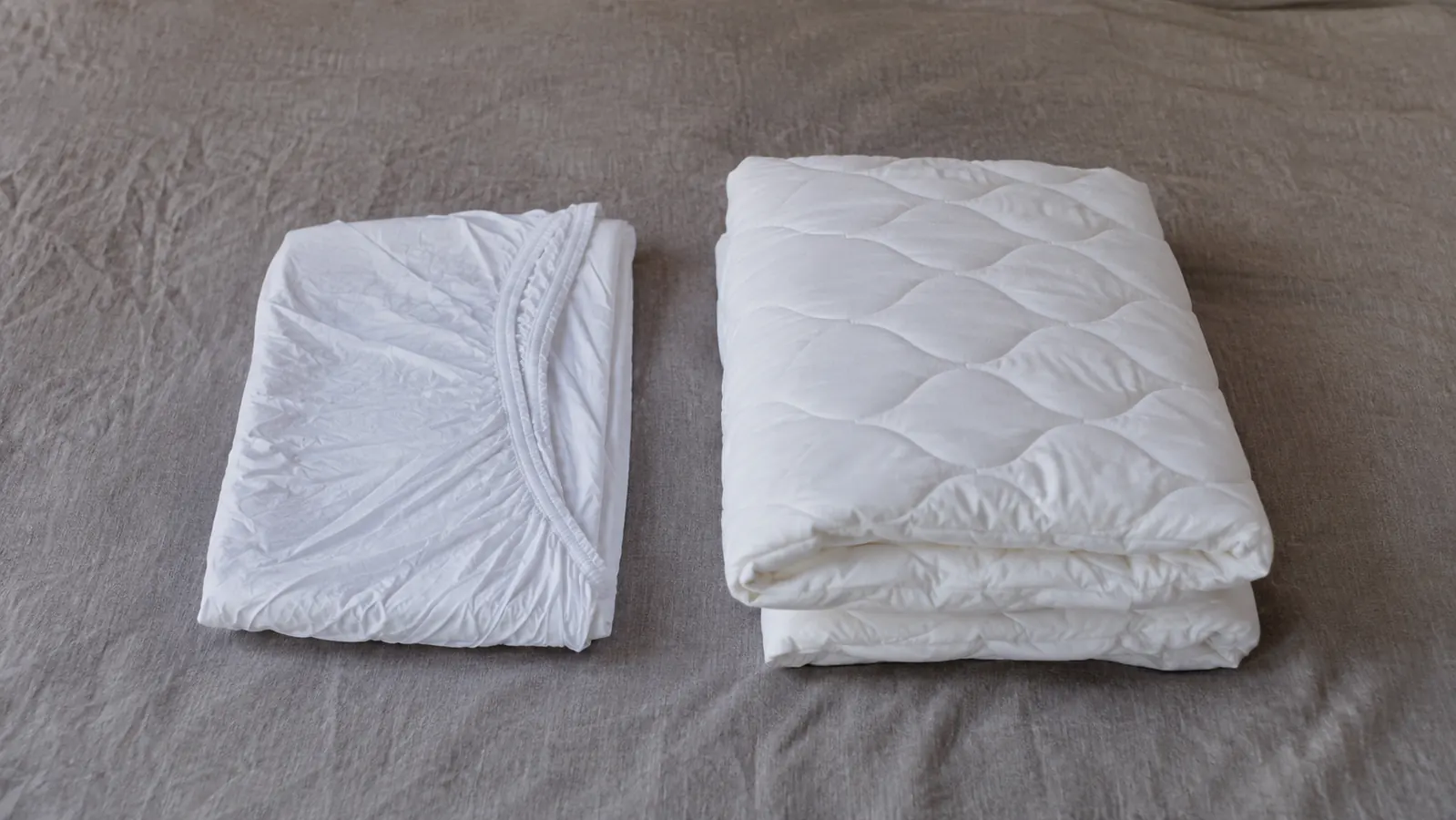
A pad wins when the actual problem is comfort, not risk. If a mattress has firmed up over the years, or was too firm from the day it arrived, a quilted or fiberfill pad adds a genuine layer of give that a thin protector simply can't. Some pads add noticeable loft, an inch or more, which can make an aging mattress feel newer without the cost of replacing it. That's a real benefit, and I don't want to undersell it if firmness is the actual complaint.
The tradeoff is that most mattress pads aren't waterproof, and the ones that are tend to be bulkier and warmer, since the padding material traps heat against the body. A pad also does nothing to stop what actually damages a mattress. Spills soak straight through the padding to the mattress underneath unless the pad has its own waterproof backing, and most don't. So a pad solves a comfort problem while leaving the protection problem completely unsolved, which is exactly why I don't recommend buying one before you own a protector.
One More Thing: Fit Under Your Sheets
This is a small detail that changes the daily experience more than people expect. Because the Linenspa protector is fitted like a sheet and stays thin, a normal fitted sheet goes on over it without a fight, no bunching at the corners, no popping loose in the middle of the night. A thicker mattress pad changes that math. Anything with real loft, an inch of fiberfill or memory foam, adds enough height that a fitted sheet sized for the mattress alone can end up stretched too tight, which is exactly what causes corners to pop off partway through the night.
If you do end up stacking a pad over a protector, budget for deep pocket fitted sheets, because the mattress height you're covering is no longer just the mattress, it's the mattress plus the protector plus the pad. That's a detail nobody mentions when they're comparing the two products on comfort alone, and it's one more reason I tell people to start with the protector by itself and only add a pad once they know they actually need the extra height.
A protector is insurance you buy regardless of how you feel about it. A pad is comfort you buy only when something is actually bothering you.
Start with the layer that actually protects the mattress
The Linenspa Waterproof Mattress Protector is the fitted, machine washable barrier I recommend buying before anything else, it's what stands between a spill and a ruined mattress.
Amazon Check Today's Price on Amazon →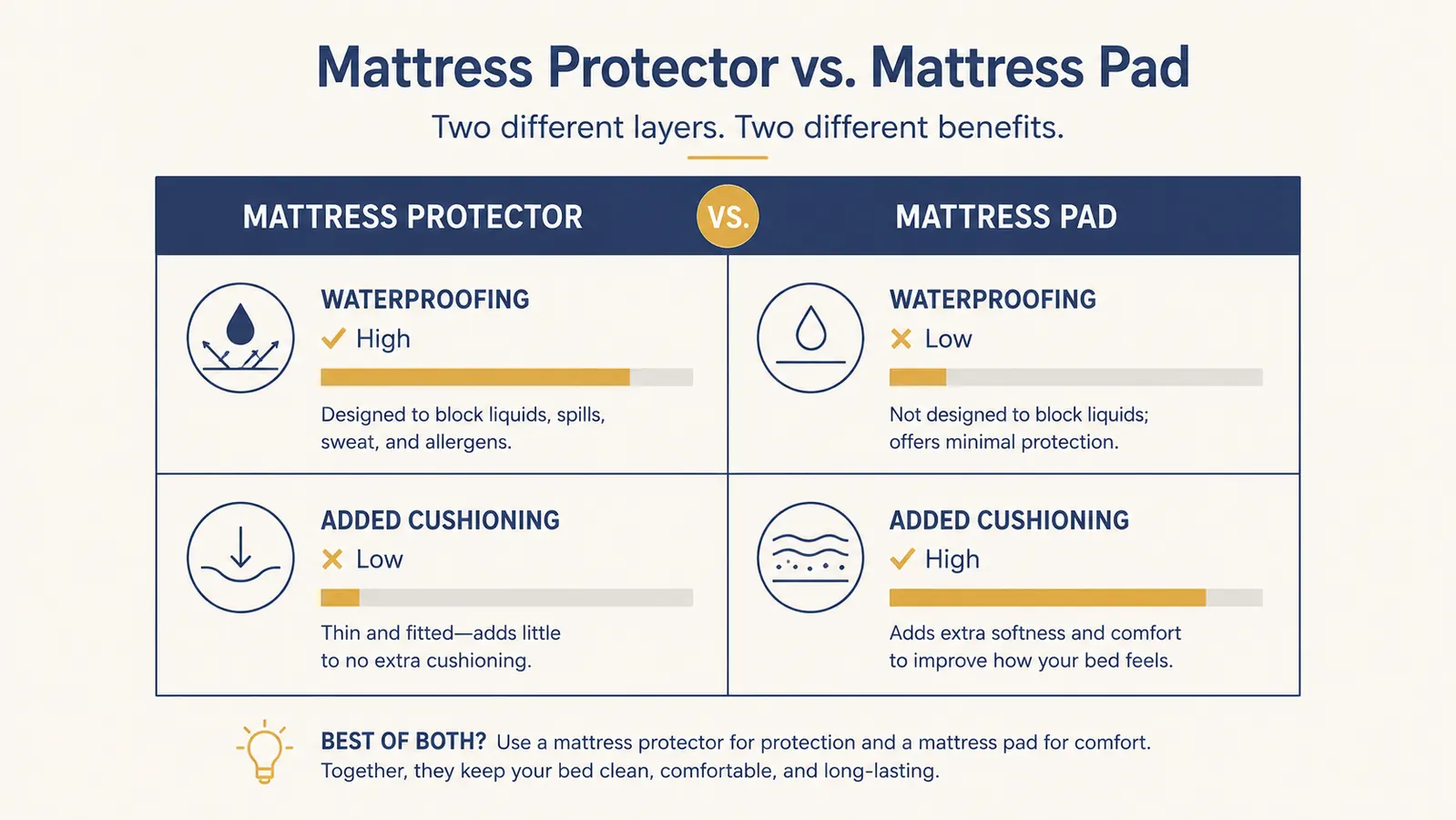
A Mistake I See People Make
The most common mistake isn't picking the wrong product, it's picking one when they actually needed both, in the wrong order. Someone buys a plush mattress pad because the bed feels a little firm, loves the extra softness for a few weeks, and then has a spill or a sweaty night with nothing waterproof underneath it. Now the pad has to be washed or replaced, and the mattress underneath took the hit anyway, since most pads don't stop liquid. The protector should always go on first, directly against the mattress. The pad, if you decide you want one, goes on top of that. That order matters more than which pad or protector brand you end up choosing.
Who Should Buy Which
If you're deciding for the first time, buy the protector. It's the lower cost of the two, it defends a mattress that likely cost hundreds or thousands of dollars, and it won't change anything about how the bed feels if the mattress is already comfortable. Add a pad on top of the protector later, if and only if the mattress itself starts to feel wrong. Stacking them is completely normal: protector against the mattress, pad on top of that if you want more cushioning, fitted sheet over everything. I run mine that way through the colder months when the extra layer helps with warmth, and skip the pad in summer when I just want the protector doing its job without adding heat.
The Bottom Line
A protector and a pad aren't competing products, they're solving different problems, and most people only need one of them right away. If nothing is wrong with how your mattress feels but you're worried about what might spill, sweat through, or wear down over time, the Linenspa protector is the one to buy first. If the mattress itself feels off no matter what's protecting it, a pad addresses that, but it should go on top of a protector, not instead of one. Getting the order right is the whole trick.
Protect the mattress before you worry about comfort
Waterproof, fitted, and machine washable, the Linenspa protector is the simple first purchase that keeps everything underneath it safe.
Amazon Check Today's Price on Amazon →