
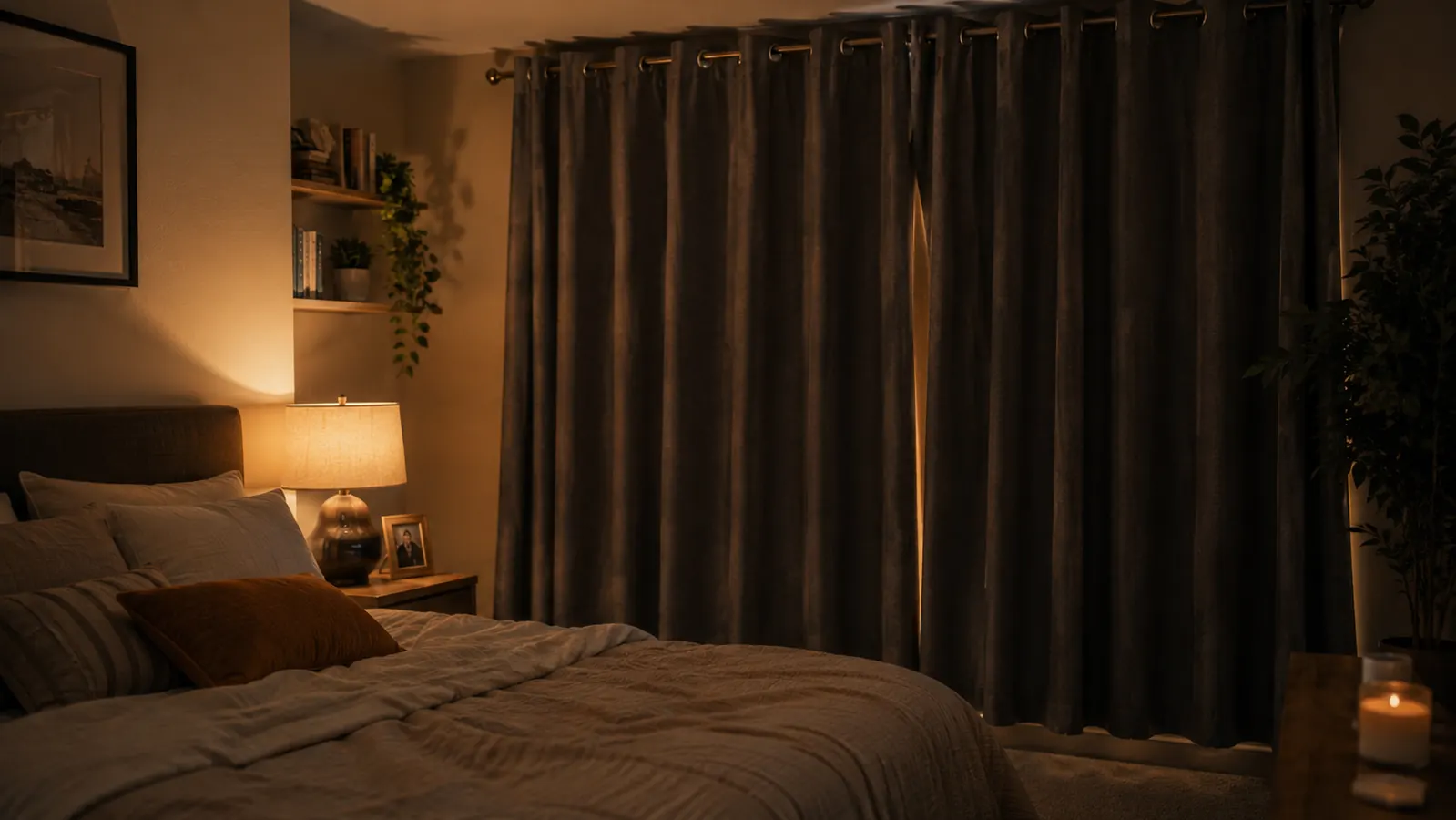
There is a sodium streetlight two houses down from us, and for the better part of a year it found every gap in our old curtains and landed a orange stripe directly across the bed. I'd wake up at 2am, again at 4am, and be fully alert well before the alarm. My partner slept through it fine, which somehow made it worse. I tried a sleep mask for a while, but I take it off in my sleep without noticing, so by month two I was back to staring at a lit ceiling.
In April I hung a pair of NICETOWN Thermal Insulated Grommet Blackout Curtains in our bedroom, the grey 42 by 63 inch panels, and I've been sleeping under them every night since. This review covers three straight months of that, not a first-week impression. I want to walk through what the fabric looks like now, whether the light blockage held up, how the panels handled two washes, and what changed in the room itself, not just what the box promised.
The Quick Verdict
Genuinely dark room, noticeably quieter, and the fabric still looks new after three months and two washes. The only real catch is the width, a standard window needs the wider panel size or a slightly wider rod.
Amazon Check Today's Price →Still waking up to a strip of streetlight across your pillow?
The NICETOWN grommet curtains are the panel I actually use, and today's price on Amazon is worth checking before you buy anything else.
Amazon Check Today's Price on Amazon →How I've Used Them
Our bedroom window faces the street, and the frame is a standard builder-grade window, roughly 36 inches wide. I measured the trim, added the usual overlap on each side, and ordered two 42 by 63 inch panels rather than trying to stretch a single one across. That extra width matters more than people expect, and I'll come back to it. I hung the panels on a plain black tension rod already mounted above the frame, so installation was genuinely five minutes, no drill, no anchors.
From the first night, the difference was obvious enough that my partner commented on it unprompted. But a first-night win doesn't tell you much. What I actually tracked over the following twelve weeks was simpler: did the room stay dark at 2am when a car passed, did the curtains still close all the way after being opened and shut every single day, and did the fabric start to sag, pill, or lose its shape at the grommets. Those are the three things that quietly ruin a blackout curtain long after the first impression fades.
I also run the room a little differently than a lot of reviewers seem to. I open these curtains fully every morning and close them fully every night, seven days a week, which means the grommets have been through roughly 180 open-close cycles by the time I'm writing this. That's the kind of daily wear that tells you something a two-week trial period never will. I keep a small notebook by the bed, more habit than method, and I jotted a line most nights about whether the room felt fully dark or not. Looking back over three months of those notes, the only nights the room didn't feel completely dark were the two nights I forgot to close the panels all the way after airing out the room.
The Fabric After Ninety Nights of Daily Use
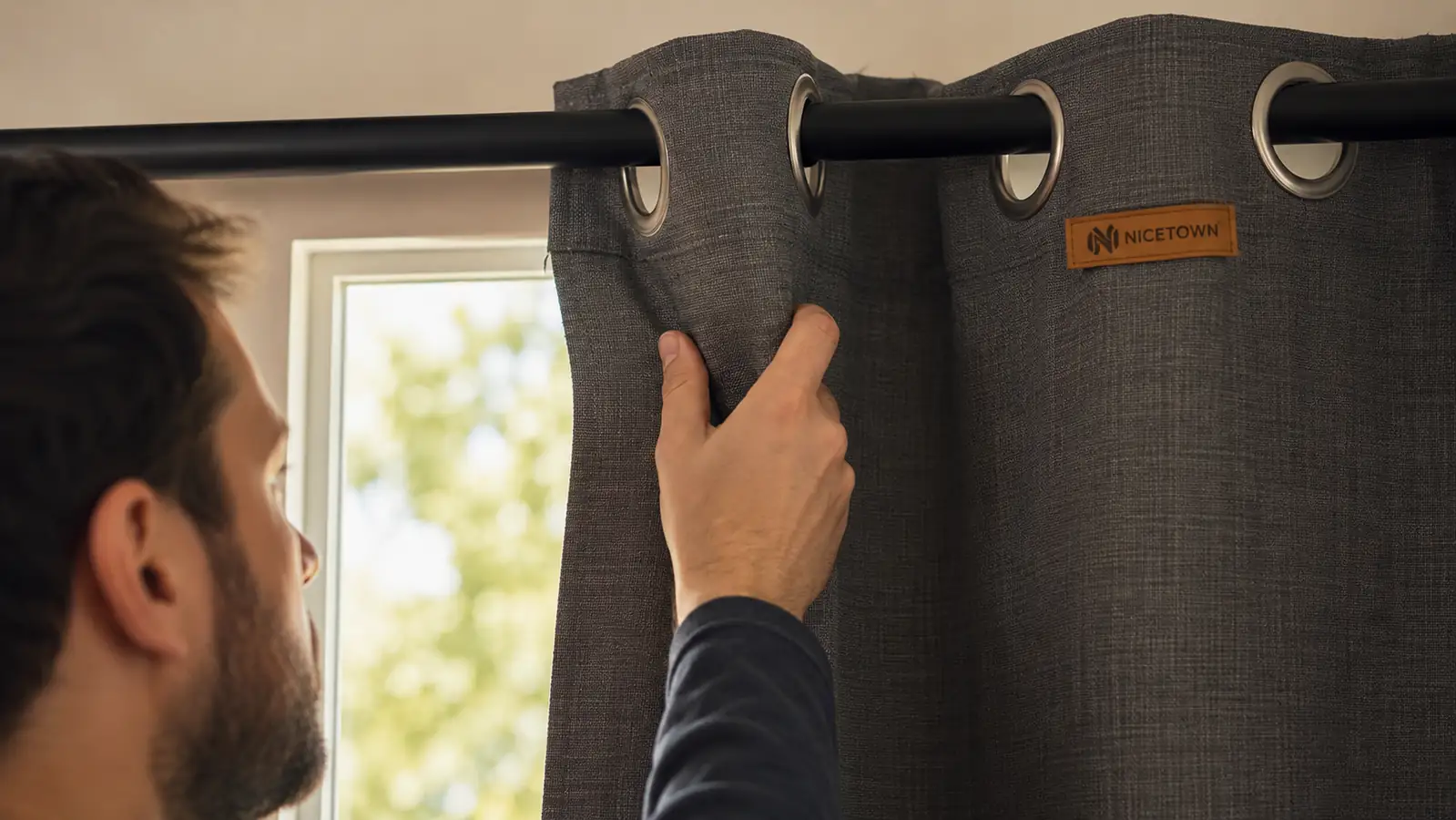
The grey fabric on our panels has not visibly faded, even though the window gets direct afternoon sun on the outside face for a few hours most days. I checked the inside fold against the outward-facing section this week, since that's usually where fading shows up first, and I could not find a meaningful difference in color between the two. The weave itself still has body to it, it hasn't gone thin or papery the way a cheaper blackout liner sometimes does after a season of sun exposure.
The grommets are the part I watched most closely, since that's the failure point on almost every curtain I've owned before this one. All sixteen rings on our two NICETOWN panels still rotate smoothly on the rod, no cracking around the metal edge, no fraying in the fabric where the grommet meets the weave. The panels glide rather than catch, which sounds small until you're the one yanking a stuck curtain closed half asleep at 11pm.
The one cosmetic change worth mentioning is a light crease pattern near the bottom hem, from three months of the panels resting against the windowsill. It's not damage, it's closer to the kind of soft wrinkle a curtain naturally develops with gravity and time, and it's not visible unless you're standing right up against the fabric looking for it. I also checked the header tape at the top, where the grommets are set into the fabric, since that seam takes the most stress over hundreds of open-close cycles. It's still fully stitched, no loose threads, no separation.
How Much Light They Actually Block
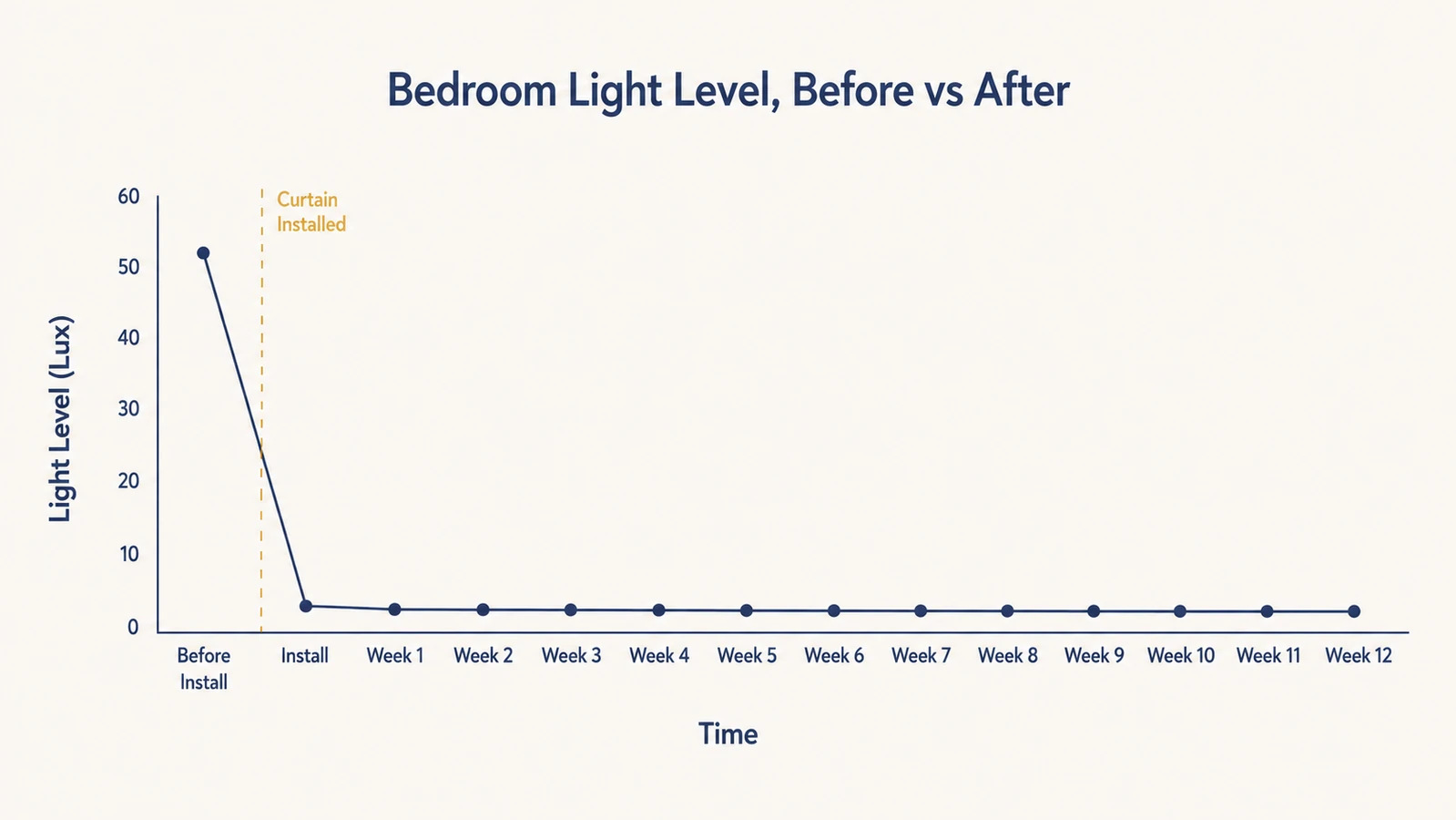
This is the number that matters most, so I'll be specific rather than vague. With the panels closed and the room lamp off, I can no longer see the streetlight's orange cast on the ceiling at all, and I used to be able to read by it. There is a thin sliver of light along the center seam where the two panels meet, maybe a quarter inch, which shows up only if a car's headlights sweep directly across the window. It doesn't wake me, but I notice it exists, and I've since read that blackout blinds seal that center gap differently than curtains do if a completely gapless seam is what someone needs.
The NICETOWN fabric is built as a tight, layered weave rather than a single thin sheet, and that's the part actually doing the work here. Held up to a bright window during the day, almost no light passes through the body of the panel itself. Every bit of leakage I've measured over three months has come from the edges and that center seam, not from light passing through the fabric, which tells me the weave itself is doing exactly what it's supposed to.
Morning light is where these curtains earn their keep the most. Sunrise here in summer comes early, and before I switched curtains I was waking with the room already half lit by 5:30am. Now the room stays genuinely dim until I open the panels myself, which has quietly reset how consistent my mornings feel. I'm not making a sleep-science claim here, I'm describing what the room physically looks and feels like at 5:30am now versus three months ago, which is darker, plainly.
Noise and Temperature, the Part I Didn't Expect
I bought these purely for light, so the noise difference caught me off guard. Our street gets a fair amount of foot and car traffic on weekend nights, and the thermal-weave fabric on the panels dampens that noticeably, not to earplug levels, but enough that a passing car is now a soft whoosh instead of a distinct engine sound. It's the kind of change you don't notice consciously until you take the curtains down to wash them and the room suddenly sounds different.
Temperature is the other quiet win. Our bedroom used to run a few degrees warmer in the late afternoon from direct sun through that same window, and closing the curtains during the day now visibly cools the room before we even get into bed. In winter I'd expect the reverse benefit, less cold radiating off the glass at night, though I haven't run a full winter with these yet, so I'll update this review once I have.
Washing and Care Over Three Months
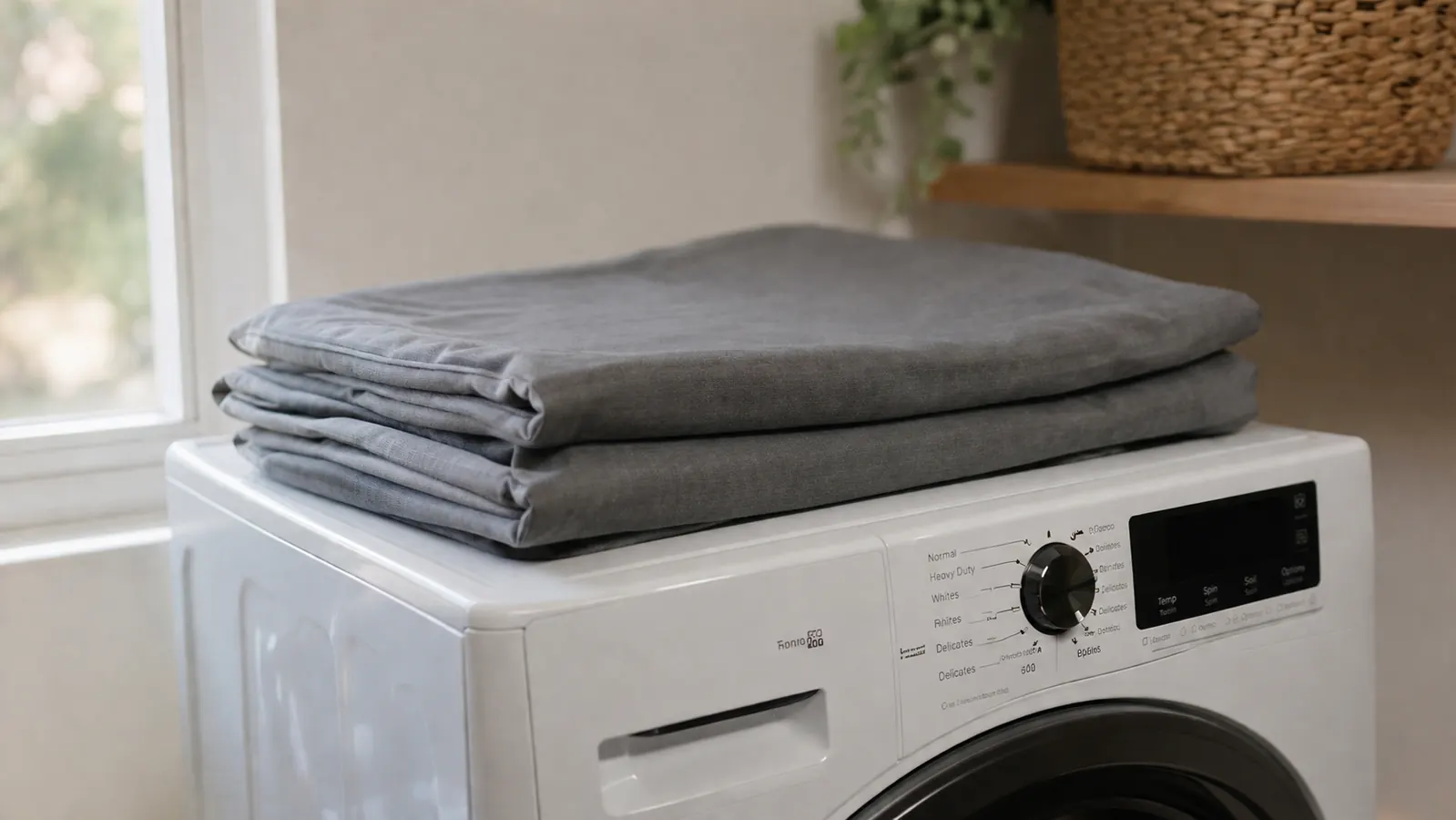
I've washed both panels twice now, once at the six-week mark and once just before writing this. Cold water, gentle cycle, and I skip the dryer entirely, hanging them back on the rod slightly damp so gravity pulls most of the wrinkles out on its own. That method has worked well, the fabric came out of both washes without shrinking noticeably and without the color pulling or bleeding onto anything else in the load.
I did try the dryer once on the first panel, low heat, and while nothing was ruined, the fabric came out slightly stiffer than the hang-dry panel next to it. Not a dealbreaker, but I've stuck with hang-drying since, and it's a five-minute step, not a real chore. Between washes I run a lint roller over the bottom third of each panel every couple of weeks, mostly for dust, and that alone keeps them looking fresh without a full wash cycle.
What I Notice Now and What I've Stopped Noticing
The strange thing about three months of daily use is how much of it stops registering. I don't consciously think about the streetlight anymore, because I genuinely don't see it. I don't think about closing the curtains at night either, it's just the last thing I do before I get into bed, the same as locking the door. That's the actual test of whether a product works long term, not whether it impresses you on night one, but whether it quietly disappears into the routine without you having to think about it at all.
What I do still notice, three months in, is the room's overall feel during the day. Closed, it reads almost like a hotel room, dim and neutral. Open, the grey fabric frames the window without looking heavy or dated the way some blackout curtains can. It has held its shape well enough that I'd hang the same panels again if we moved, rather than treating this as a temporary fix.
What I Liked
- Blocks the streetlight completely, no more orange glow on the ceiling
- Grommets still glide smoothly after roughly 180 daily open-close cycles
- No visible fading after three months with daily direct afternoon sun
- Noticeably quieter street noise and a cooler room in the afternoon
- Machine washable and holds its shape without shrinking, if you skip the dryer
Where It Falls Short
- A thin sliver of light along the center seam where the two panels meet
- Dryer heat leaves the fabric slightly stiffer than hang-drying does
- A standard window needs the wider panel size or an extra-wide rod to close the center gap fully
I used to be able to read by the streetlight through my old curtains. I can't anymore, and that's the whole review in one sentence.
Who This Is For
If you've got a streetlight, an early sunrise, or a bedroom that faces west and turns into a greenhouse every afternoon, these solve that plainly and cheaply. They're also a solid fit if you've read why a genuinely dark room tends to make falling and staying asleep easier and want something that actually delivers on that without a big install project. Renters especially, since a tension rod means no drilling and no landlord conversation. For what a pair of decent panels usually runs, these have earned their keep every single night for three months straight, which is more than I can say for the sleep mask sitting unused in my nightstand drawer now.
Who Should Skip It
If your window is wider than about 36 inches and you're only buying one panel, or a narrower single-panel size, you'll likely end up with that center light gap being wider than mine, closer to an inch or two rather than a sliver. Buy the panels sized for full overlap, or add a second pair, rather than stretching one set thin. And if you need true blackout for something like shift-work daytime sleep with zero light tolerance at all, it's worth pairing these with a snug-fitting sleep mask for backup rather than expecting curtains alone to hit total darkness.
Three months in, this is still the curtain on our own bedroom window.
If a streetlight or an early sunrise is the thing keeping you up, check today's price on the NICETOWN panels before you spend more on something fancier.
Amazon Check Today's Price on Amazon →