

If you wake up most mornings with a tangled nest on one side of your head, frizz along the hairline, and hair that feels drier at the ends than it did the night before, the damage isn't happening while you're brushing or styling. It's happening during the six to eight hours you're asleep, and almost nobody counts that stretch of time as part of their hair routine. I didn't either, until I started comparing what my hair looked like going to bed against what it looked like coming off a standard cotton pillowcase in the morning. The difference wasn't subtle, and it wasn't really about the hair products I was using.
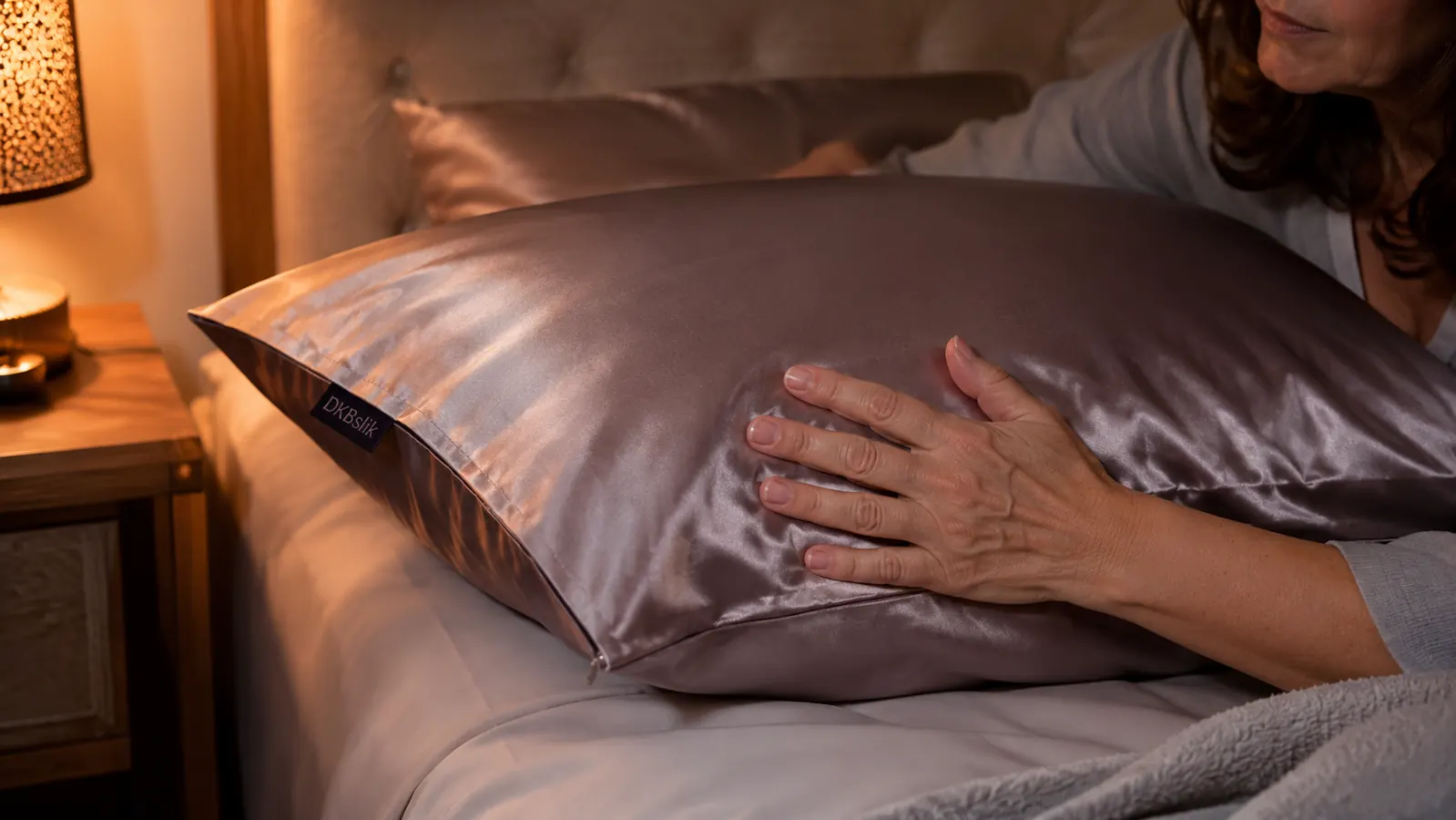
I tested a DKBslik mulberry silk pillowcase for this guide, sleeping on it most nights over several months, alongside changes to how I put my hair up before bed. The pillowcase matters, but it's only one lever, not the whole fix. Cotton is rough at a fiber level. Under a microscope it looks like a hooked cloth, and every one of those hooks catches on hair as you move through the night, tugging at strands, roughing up the outer cuticle layer, and pulling moisture out as you toss and turn. A silk case removes that friction, but it does nothing about the other two real culprits: going to bed with wet hair, and tying it up in a way that puts tension on the same few strands every single night. Here's the full routine, step by step, not just the pillowcase swap.
Before You Try Another Product, Fix What Your Head Rests On for Eight Hours
A DKBslik mulberry silk pillowcase is the one change in this guide you only have to make once. Check today's price on Amazon and see the current momme weight, size, and color options before you read on.
Amazon Check Today's Price on Amazon →Step 1: Work Out What's Actually Damaging Your Hair Overnight
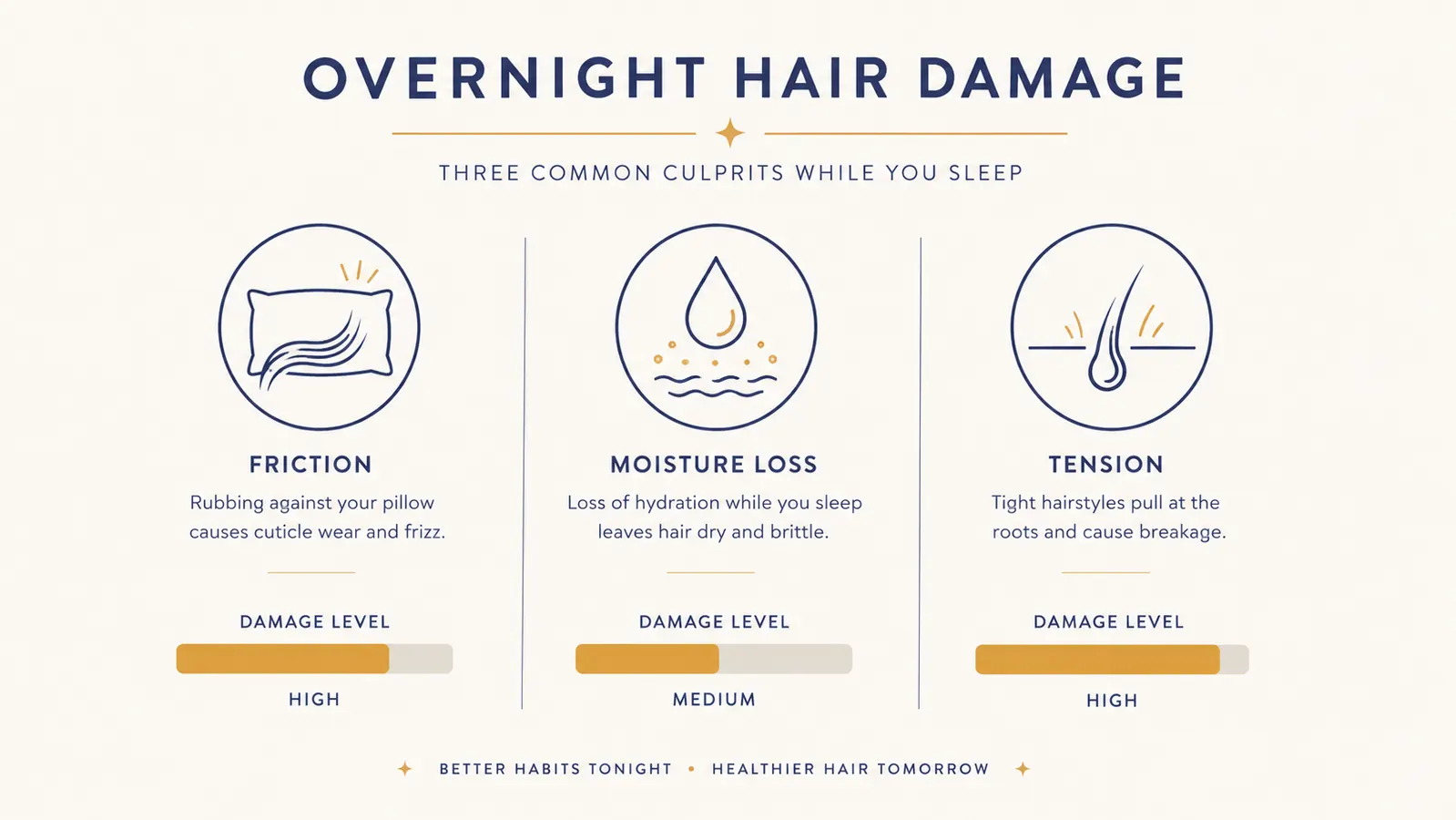
There are three separate things happening to your hair while you sleep, and they don't all get fixed the same way. The first is friction, the physical rubbing of hair against fabric every time you shift position, which roughens the cuticle and shows up as frizz and tangles. The second is moisture loss, fabric that pulls water and natural oil out of the hair shaft over hours of contact, which is worse if your hair is porous or already on the dry side. The third is tension, the pull created by however you've tied, braided, or clipped your hair before bed, concentrated on whatever spot the elastic or clip sits against. Fine, straight hair tends to show friction damage first. Curly and textured hair tends to show moisture loss first.
Most people only address one of these, usually friction, by buying a silk or satin pillowcase and calling it done. That helps, but if you're still going to bed with wet hair or the same tight ponytail every night, you're solving one problem while the other two keep doing damage. The rest of this guide covers all three, because a pillowcase on its own is a partial fix, not a complete one.
Step 2: Never Go to Bed With Soaking Wet Hair
Wet hair is at its weakest point. Water causes the hair shaft to swell and the outer cuticle to lift slightly, which makes strands more elastic and far more prone to snapping under friction or tension than dry hair is. Sleeping on hair that's still dripping or heavily saturated means every bit of movement against the pillow, silk or not, is happening while your hair is in its most fragile state. This is the step people skip most often, usually because showering right before bed is convenient, and it undoes a lot of the benefit of switching pillowcases in the first place.
The fix isn't complicated. Shower earlier in the evening if your schedule allows it, or towel dry with a microfiber towel or an old cotton t-shirt, which causes less friction than a regular bath towel, and let hair air dry to at least damp, ideally close to dry, before you lie down. If you truly cannot avoid a late shower, a loose braid done on damp rather than wet hair is far gentler than sleeping on it loose.
Step 3: Choose a Real Mulberry Silk Case, and Check the Momme Weight
This is where a lot of people get fooled at the point of purchase. Silk and satin are not the same thing. Satin is a weave, and it can be made from silk, polyester, or nylon, so a listing that says satin pillowcase could be entirely synthetic and offer none of silk's actual benefits. Look specifically for the words mulberry silk and a fabric content of 100 percent silk, not a satin weave in silk-like polyester. Weight matters too. Silk quality is measured in momme, and anything under about 16 momme tends to feel thin and snags easily, while a case in the 19 to 25 momme range holds up to regular washing without pilling or tearing. The DKBslik case I used lists its momme weight and material right in the product details, which made this an easy check before buying.
It's a small line on a product page, but it's the difference between a pillowcase that lasts a couple of years and one that thins out and starts snagging after a few months of normal washing. If a listing doesn't mention momme weight at all, that's usually a sign the fabric is a lighter, cheaper cut, and it's worth reading a few reviews specifically for complaints about pilling or tearing before you buy.
Step 4: Put Your Hair Up the Right Way, Not Just Any Way
How you wear your hair to bed matters as much as what it lies on. A loose braid keeps strands from tangling with each other and spreads any remaining tension along its length instead of concentrating it in one spot, and it works well for most lengths as long as it's not pulled tight at the crown. A pineapple, gathering hair loosely at the very top of the head with a soft scrunchie, works especially well for curly or textured hair because it preserves the curl pattern instead of flattening it against the pillow. A silk or satin scrunchie, rather than a standard elastic, avoids leaving a crease or a snag point at the base.
The thing to avoid is a tight elastic in the same spot every single night. That's the worst combination on this list, because it combines constant tension with a fixed point of friction, and over months it can create a visibly weaker section of hair right where the elastic sits. If you always pull your hair into the same low ponytail before bed, that's very likely doing more damage than whatever pillowcase you're sleeping on. Rotate the style, or at least rotate where on your head the tie sits, and keep it loose enough that you could slide a finger under it without much resistance.
Step 5: Wash the Case on Cold, and Keep It Away from Heat
A silk pillowcase only helps as long as it's clean. Facial oil, hair product residue, and dead skin cells build up on the surface over a couple of weeks of nightly use, and once that happens the case itself becomes a source of friction and buildup instead of a solution to it. Wash it on a cold, gentle cycle with a mild detergent, and skip fabric softener entirely, since it coats silk fibers and reduces the smoothness that's the whole point of the material.
Skip the dryer, or use the lowest possible heat setting for the shortest time, since high heat is what breaks down silk fibers fastest and shortens the life of the case. Laying it flat or hanging it to air dry takes longer but keeps it in usable condition much longer. If you can, keep a second case in rotation so you're never stuck sleeping on cotton for a night or two while the silk one is drying.

Step 6: Check the Fit and the Zipper Before You Sleep
A silk pillowcase that slides off the pillow halfway through the night defeats the entire point, because you end up sleeping on bare pillow ticking, which is often rougher than cotton. Match the case size to your actual pillow, standard, queen, or king, rather than assuming one size fits all. A case with a hidden zipper closure, like the one on the DKBslik pillowcase, keeps the pillow fully enclosed so it doesn't bunch, twist, or work its way out of the opening the way an envelope-style case can.
It only takes a few seconds to check before bed. Zip it closed, smooth it flat, and tuck any excess fabric under the pillow rather than letting it bunch at the edges. It's a small habit, but a loose or twisted case undoes a lot of the friction reduction you bought the thing for in the first place.
Step 7: Know What Changes in the First Week vs the First Month
In the first week, the most noticeable difference is usually less frizz and fewer tangles when you wake up, since that's the friction piece working immediately. Hair that used to need serious detangling in the morning starts coming out closer to how it went in. That part is fast, and it's the piece most people notice right away and mention first.
The moisture and breakage side takes longer to show, closer to four to eight weeks of consistent use, since it's really about fewer split ends accumulating and less breakage at stress points, not something that reverses damage that's already there. If your hair has been stressed by tight ponytails or heat styling for years, a silk pillowcase and a better nighttime routine will slow future damage, they won't repair what's already broken. Set that expectation early so you don't give up on the routine after a week just because it didn't fix years of wear overnight.
What Else Helps
None of this replaces a full nighttime hair routine, it works alongside one. A wide-tooth comb before bed removes tangles without the pulling a brush can cause. Heat styling right before you sleep, especially anything above a low setting, leaves hair more vulnerable overnight, so give it time to cool down if you style in the evening rather than right after waking up. Dry indoor air can make hair more brittle and static-prone too, which is worth knowing if you run heat or air conditioning most of the year. For a broader look at what a silk pillowcase changes beyond frizz, including skin and how it holds up over time, see 10 reasons silk pillowcases help your hair and skin and my full honest review after sleeping on one every night.
The pillowcase fixes one problem. Wet hair and a tight ponytail can still undo it every single night.
Stop Losing the Fight Every Night
Pair a real mulberry silk case with the routine above and most of the overnight damage stops before it starts. Check today's price on the DKBslik silk pillowcase on Amazon and see current sizes and colors.
Amazon Check Today's Price on Amazon →