
The first time I switched a pillow over to silk, I almost switched it right back the next morning because the case had slid halfway off the pillow in the night. That happens with silk sometimes, and I'll get into why. But I kept at it, and after a full season of sleeping on both fabrics on alternating weeks, the pattern was clear enough that I stopped needing to think about it.
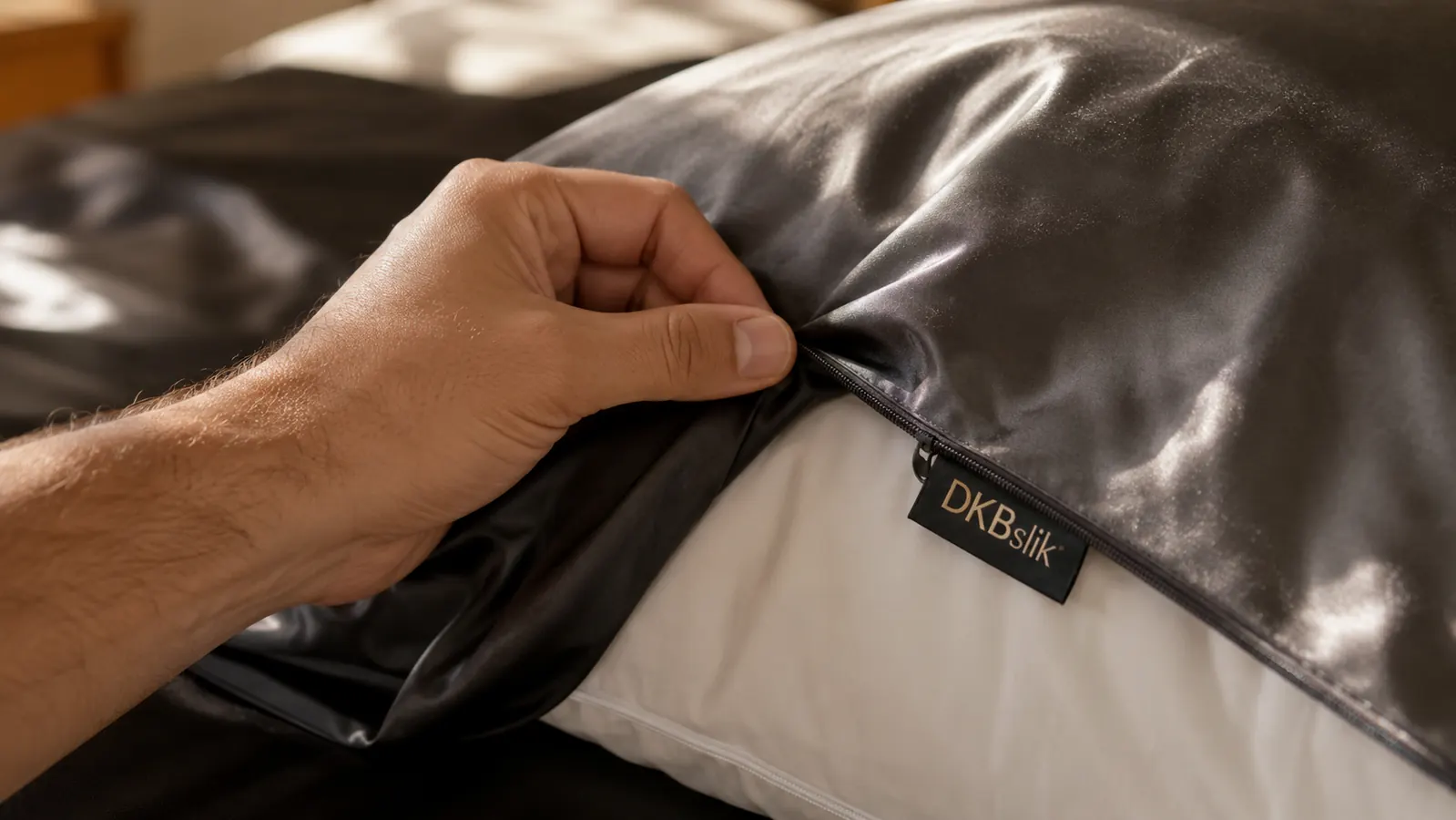
I run a bedroom test bench of sorts, not a lab, just my own bed and a partner willing to put up with pillow swaps every few days. Right now the winner on my own pillow, most nights, is the DKBslik mulberry silk pillowcase. It is not the fanciest silk case on the market and it is not trying to be. It is a plain, well finished 22 momme mulberry silk case with a hidden zipper, and it does the two things I actually care about, cutting down friction on hair and reducing the tug and crease marks I used to wake up with on my cheek.
Cotton is not a bad fabric, and I want to be upfront about that before this turns into a silk sales pitch. A plain cotton pillowcase is cheaper, tougher, and far more forgiving in the wash. If you read this whole comparison and land on cotton, that is a completely reasonable place to land. What follows is the actual trade-off, not a marketing version of it.
How I Tested Both
I did not run a lab test with instruments and a control group. What I did was simpler and, I think, more useful. I kept two pillows made up at all times, one in a plain woven cotton case and one in the DKBslik silk case, and alternated which fabric I slept on every three to four nights across about six weeks, then kept using whichever felt better for the following months. I paid attention to three things each morning, how tangled my hair felt when I first ran a hand through it, whether my cheek had a visible crease line, and how the pillowcase itself looked, wrinkled, shifted, or still roughly in place.
My sleep schedule is not a tidy 10pm to 6am block, which turned out to matter more than I expected. Some weeks I am up reading well past midnight, other weeks I am out earlier than most people are still awake. That means more position changes per night than a textbook eight hours, and more chances for a rough fabric to catch on hair or press a line into skin. If your schedule is similarly irregular, the friction difference between these two fabrics will likely show up faster for you too.
| DKBslik Mulberry Silk Pillowcase | Cotton Pillowcase | |
|---|---|---|
| Surface Friction on Hair | Smooth, low-friction weave that lets hair glide instead of catching, less tangling and fewer snags on waking | Woven cotton fibers grip hair strands, especially with any texture or curl, which shows up as tangles and frizz by morning |
| Moisture Absorption | Absorbs very little from skin or hair, so overnight serums and leave-in product mostly stay where you put them | Absorbs moisture readily, pulling natural oils and applied product out of hair and skin over the course of the night |
| Feel on a Warm Night | Stays noticeably cool to the touch and does not trap heat against the face the way a thicker weave can | Breathes fine but tends to feel warmer and slightly damp on humid nights, especially with percale left off the shopping list |
| Washing and Drying Rules | Cold water, gentle cycle or hand wash, mild detergent only, lay flat or low tumble, more steps and more care each time | Tosses into a normal hot wash with the rest of the laundry, dries in a standard cycle, no special handling needed |
| Durability Over Many Cycles | Can develop snags from rough nails or jewelry and the weave can thin faster if washed on the wrong setting | Holds up to years of regular washing, tolerates bleach and hot water, replaced only when it wears thin or fades |
| Wrinkle and Crease Behavior | Wrinkles easily and can look a little rumpled by morning even though it presses out fast with a light iron on low heat | Creases too, but a percale or sateen cotton weave tends to hold its shape a bit longer through the night |
| Cost per Case | Standard case costs more upfront for one pillow | Very affordable per case, and multi-packs bring the per-case price down even further |
Where the DKBslik Silk Pillowcase Wins
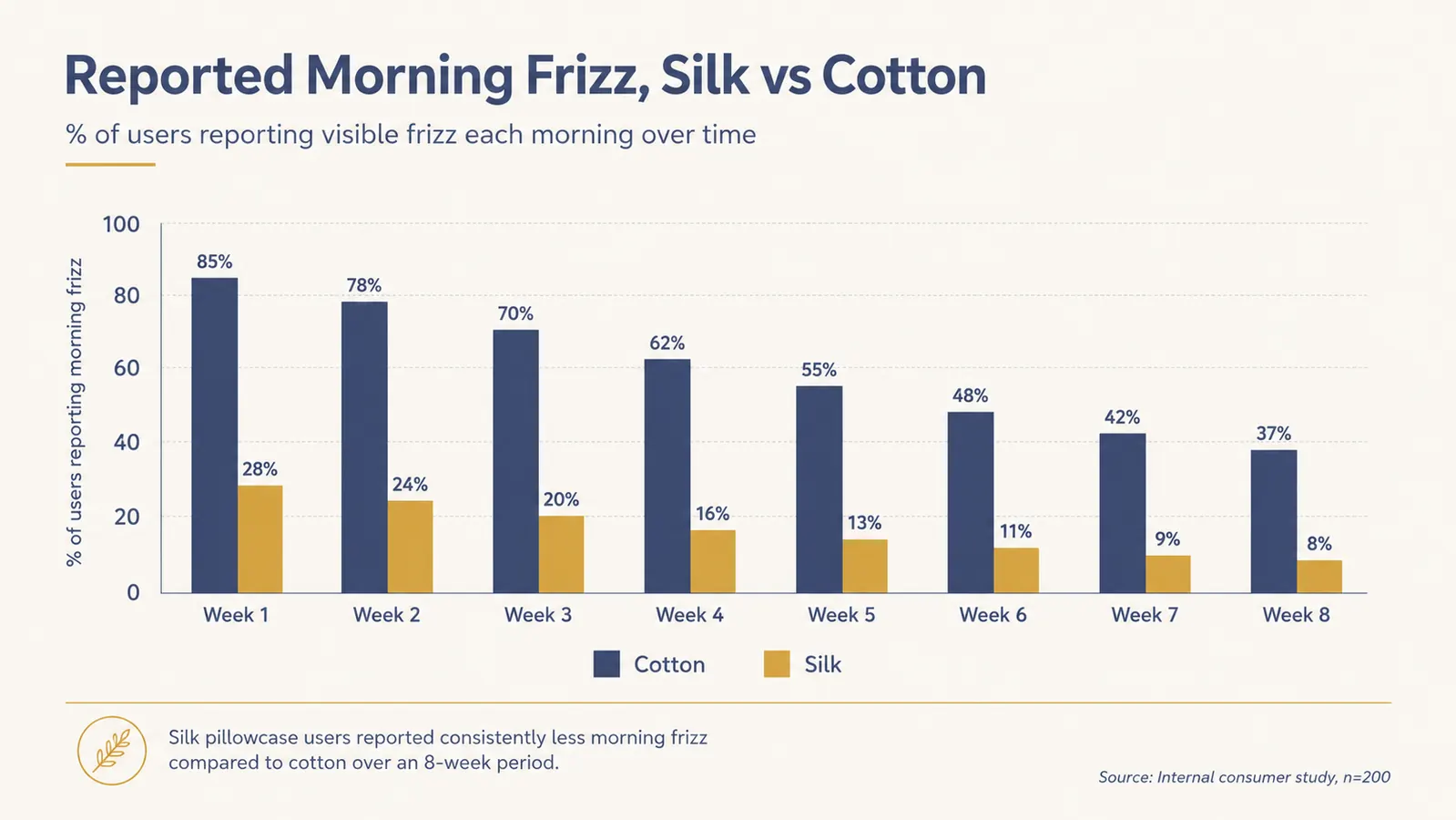
The friction difference is the whole reason people switch to silk in the first place, and it is the one thing I noticed inside the first week. On cotton, my hair would catch on the weave every time I shifted position, and I shift a lot since I don't sleep on a fixed schedule. Some nights I'm up reading at 1am, some nights I'm out by 10. Every position change on cotton meant a small tug. On the silk case, my hair mostly just slides with me. Less tugging overnight showed up as less tangling and less breakage at the ends by the time I brushed it out in the morning.
The second piece is moisture. Cotton is absorbent by design, that is part of what makes it useful as a towel fabric too, but on a pillowcase that same quality pulls moisture out of skin and hair overnight. If you use a night cream or a leave-in hair treatment, a cotton case will soak a noticeable amount of it into the fabric before morning. The silk case barely takes any of it. My skin felt less tight and dry when I woke up, and product I applied before bed was still doing its job rather than sitting in the pillowcase instead of on my face.
Temperature was the surprise category for me. I expected the silk to feel neutral at best, but on warm nights the DKBslik case actually stayed noticeably cooler against my cheek than cotton did, especially the plain, thinner weave cotton case I was rotating against. It is not a substitute for a real cooling pillow or a fan, but on a muggy night the difference between a case that feels warm and slightly damp versus one that stays cool is enough to notice within the first few minutes of lying down.

Where Cotton Wins
Cotton wins on price and it is not close. A cotton case runs a few dollars and multi-packs are everywhere, so replacing one is a non-event. Silk asks for a bigger upfront spend per case, and if you want a case for every pillow in the house, that adds up fast. If budget is the deciding factor, cotton is the honest answer and I would not talk anyone out of it.
Cotton also wins on how forgiving it is. I have thrown cotton cases into a hot wash with everything else in the hamper for years without a second thought. The silk case needs cold water, a gentle cycle or a hand wash, and a mild detergent, or it starts to look worn faster than it should. On a busy week that extra step is easy to skip, and skipping it is exactly how a silk case gets damaged. Durability follows the same pattern. Cotton shrugs off years of regular laundering. Silk can snag on a ragged fingernail or a stray bit of jewelry, and I have a small pull near one hem to prove it.
There is also a household-logistics argument for cotton that gets skipped in most comparisons. If you strip and remake beds often, guest rooms, kids' rooms, a bed that gets used by more than one person, cotton lets you buy in bulk, wash everything together, and not worry about which pillowcase needs special handling this week. Silk works best when it is a dedicated case on your own pillow that you are willing to treat a little differently from the rest of the laundry. I learned this the hard way after tossing a silk case into a regular hot wash with a towel load once, out of habit, and it came out visibly duller and a little rougher than it had been. Cotton would have shrugged that off without a mark.
See today's price on the DKBslik mulberry silk pillowcase
If the friction and moisture difference matters more to you than the extra laundry step, this is the case I keep coming back to on my own pillow.
Amazon Check Today's Price on Amazon →Cotton never once let me down in the wash. Silk never once let me down on my hair. That is the whole trade-off, and it does not resolve itself, you just pick which side of it you'd rather live with.
Who Should Buy Which
If you have long or textured hair that tangles easily, if you use night skincare products you actually want to stay on your skin, or if you wake up with a crease pressed into your cheek most mornings, the silk case is worth the extra care it asks for. That is especially true if your sleep schedule is irregular, since a low-friction surface matters just as much for a 2pm nap as it does for an overnight stretch, and you are more likely to notice the difference when you are already running on less sleep than usual. I've paired mine with a set of notes from six months of daily use if you want the longer version of how it held up over time.
If your priority is a low-maintenance case that survives hot washes, bleach, and a busy laundry routine without complaint, cotton is the better fit and there is no reason to feel like you are settling. Plenty of people sleep just fine on cotton for their whole lives. Where I'd draw the line is short hair that does not tangle much and skin that does not react to overnight dryness, both cases will treat you fine and the price gap is the deciding factor at that point. For a more skeptical, warts-and-all take on the silk side, I wrote up what nobody tells you about switching to silk after living with it for a while.
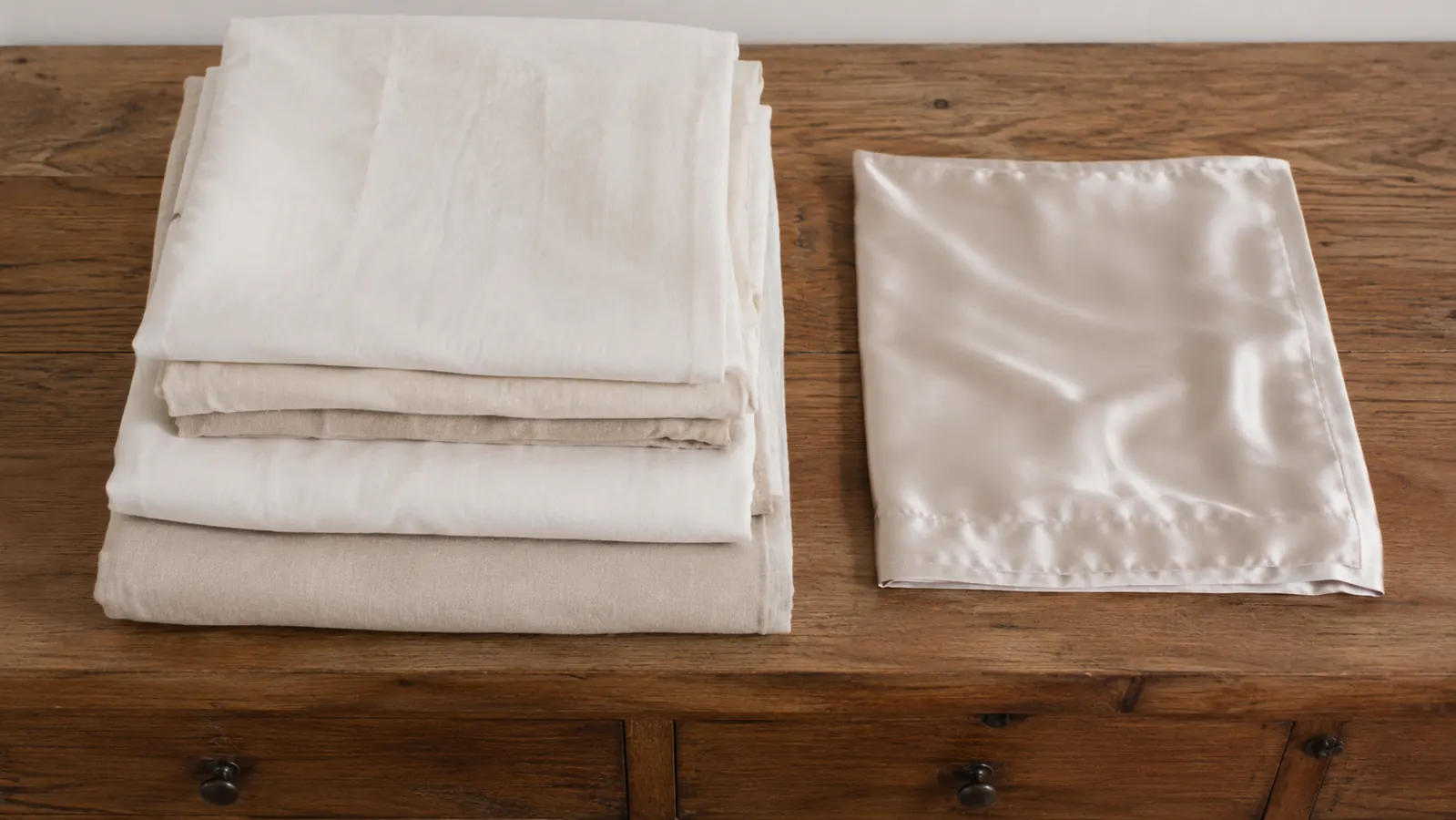
My honest middle ground, for what it's worth, is one silk case on the pillow I actually put my face on every night and cotton everywhere else in the house. That split gets most of the hair and skin benefit without turning every load of laundry into a special-handling chore, and it is the setup I have actually kept going with well past the point where I stopped tracking it for this comparison.
Ready to stop waking up with tangles and crease lines
The DKBslik mulberry silk pillowcase is the one I actually reach for most nights. Check the current price before you decide.
Amazon Check Today's Price on Amazon →