

I started wearing Flents foam ear plugs to bed on a Tuesday in late January, mostly because I was tired of losing an hour of sleep every night to a neighbor's dog and a street that gets loud around 2 a.m. I did not expect to still be wearing them every single night six months later, but here I am, and I've gone through enough pairs now to actually say something useful about how they hold up over time rather than how they feel on night one.
This is not a first-impressions review. I already wrote one of those. This one is about what happens after you commit to a pair of foam plugs as a nightly habit instead of an emergency tool: how the foam behaves after hundreds of compressions, how often a single pair actually needs replacing, what the bedroom sounds like now compared to before, and which parts of the routine stopped bothering me and which parts still do.
The Quick Verdict
Six months in, the Flents foam plugs still recover their shape after nightly compression and knock the bedroom down to a low, manageable hum. The only real cost is remembering to swap a worn pair before it stops expanding fully.
Amazon Check Today's Price →Still reaching for a pillow over your head at 1 a.m.?
That's the plug I was using before this one, minus the plug. Flents foam ear plugs are cheap enough to keep a stack going and simple enough that there's nothing to charge, pair, or forget.
Amazon Check Today's Price on Amazon →How I've Used These Every Night
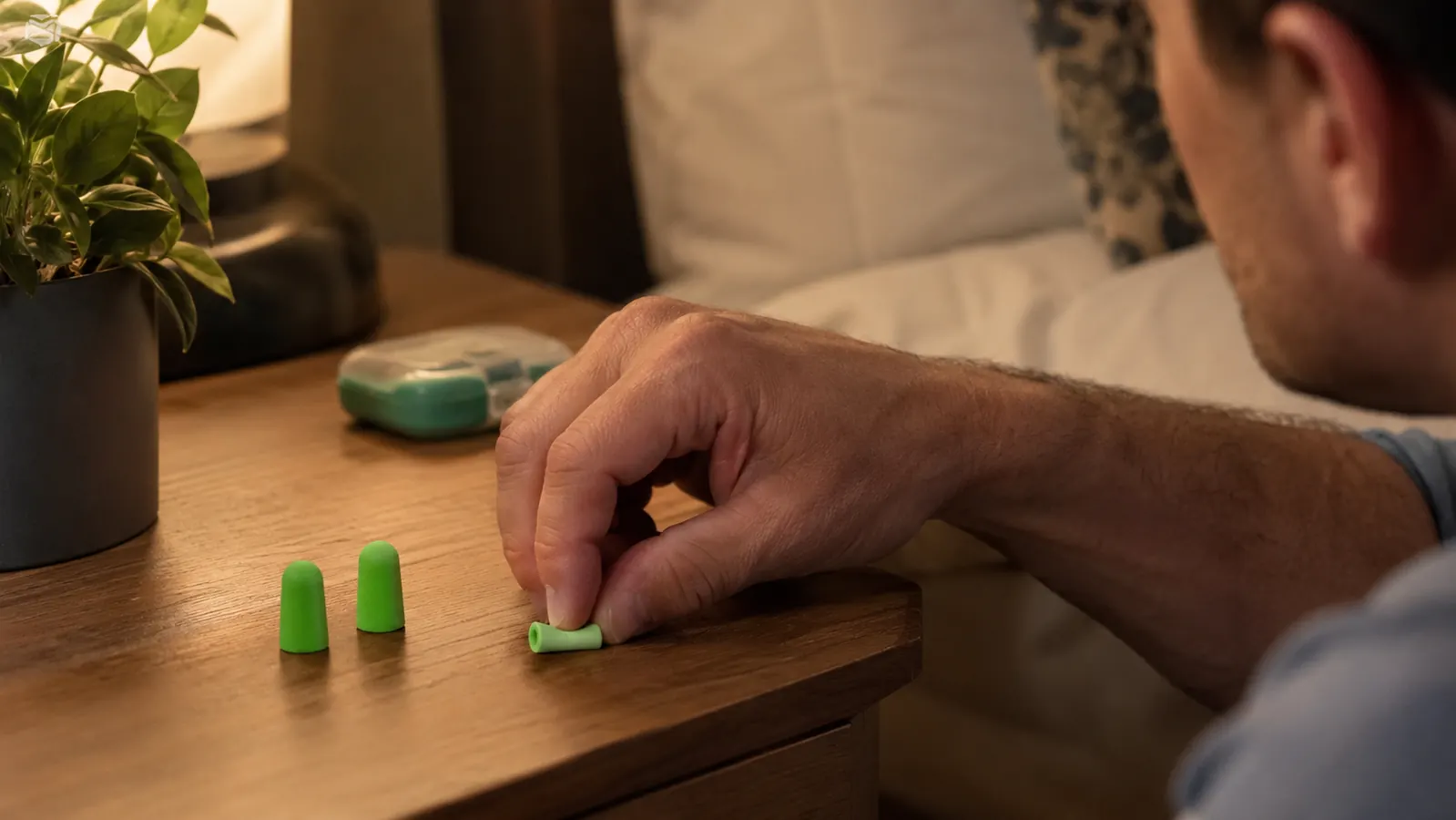
My test setup is about as unscientific as it gets, which is exactly the point. Every night since late January, I've rolled a pair of Flents foam plugs between my fingers, pressed them in, and waited the usual thirty seconds for them to expand before I actually feel the noise drop. I sleep on my side most nights, sometimes on my back, and I share a bed, so I needed something that wouldn't get pushed out of shape by a pillow or dislodged when I roll over.
I didn't rotate between brands during this stretch. I wanted one variable to hold steady so I could actually track how a single product behaves over months rather than comparing apples to oranges every week. I kept a small dish on the nightstand for fresh pairs and a separate spot for the ones I was still using, which turned out to matter more than I expected once I started paying attention to hygiene and wear.
I also didn't baby them. Some nights I fell asleep with my hair still damp from a shower. Some nights I was in a hotel room and forgot my usual dish entirely and just tossed a pair in a jacket pocket. The point of a six-month review is watching how a product performs under the sloppy, real conditions of an actual life, not a lab bench. That kind of casual handling is closer to how most people actually treat a cheap, disposable product day to day, and it's a fairer test of durability than a pristine nightstand routine would be.
How the Foam Holds Up After Hundreds of Compressions
The thing I was most curious about going in was foam recovery. Every foam ear plug feels great for the first few nights. The question is whether the foam keeps snapping back to its full size after being rolled thin and squeezed into an ear canal a few hundred times, or whether it starts staying compressed, going soft in the wrong places, or losing its seal. Flents held up better than I expected on this front, at least within the life of a single pair, which for me landed somewhere between two and four nights before I moved to a fresh one.
What actually degrades first isn't the expansion, it's the surface. After a couple of nights the outer layer of foam picks up a slight tackiness from skin oil and gets a bit less springy to roll. It still expands, but it takes a beat longer and the seal feels a little less complete than a brand-new pair. That's the signal I use now to know it's time to grab a fresh one rather than trying to squeeze a fourth or fifth night out of something that's already lost some of its bounce. I started noticing this pattern clearly by month two, once I had enough repetitions to compare a fresh pair side by side with one that had already done two nights of work.
I never had a pair that failed outright, split, or stopped expanding altogether. The decline is gradual and honestly pretty forgiving if you're not paying close attention, which is part of why I think a lot of people ride the same pair for a week or two without noticing they're getting less protection than they think they are.
Hygiene and How Often I Actually Replace a Pair
This is the part nobody talks about when they review foam ear plugs, and it's the part that matters most if you're planning to wear them every night rather than occasionally. I landed on a two to three night cadence per pair, which works out to roughly ten to fifteen pairs a month. Flents sells these in packs large enough that this isn't a math problem worth worrying about, and at the price point I've never felt like I was rationing them the way I might with a pricier product.
I keep a clean dish and a used dish, wash my hands before I roll a new pair, and toss anything that's visibly darkened or feels gritty rather than smooth. That last part surprised me. A pair that's been used a few too many nights doesn't just lose bounce, it can pick up a slightly grainy texture on the surface that I only noticed once I started really paying attention during this test. It's not dramatic, but once you feel it, you don't want that texture back in your ear. I now treat that texture change as a hard stop rather than something to push through for one more night.
I'll also say plainly that I did not sanitize or reuse a pair beyond the point where it felt clean to the touch, and I wouldn't recommend anyone stretch a single pair across a full week of nightly wear. If you're going to wear foam plugs every night for months the way I did, budget for replacing them often. It's a small ongoing cost, but it's a real one, and it's the tradeoff for how cheap the up-front price looks.
What the Bedroom Actually Sounds Like Now
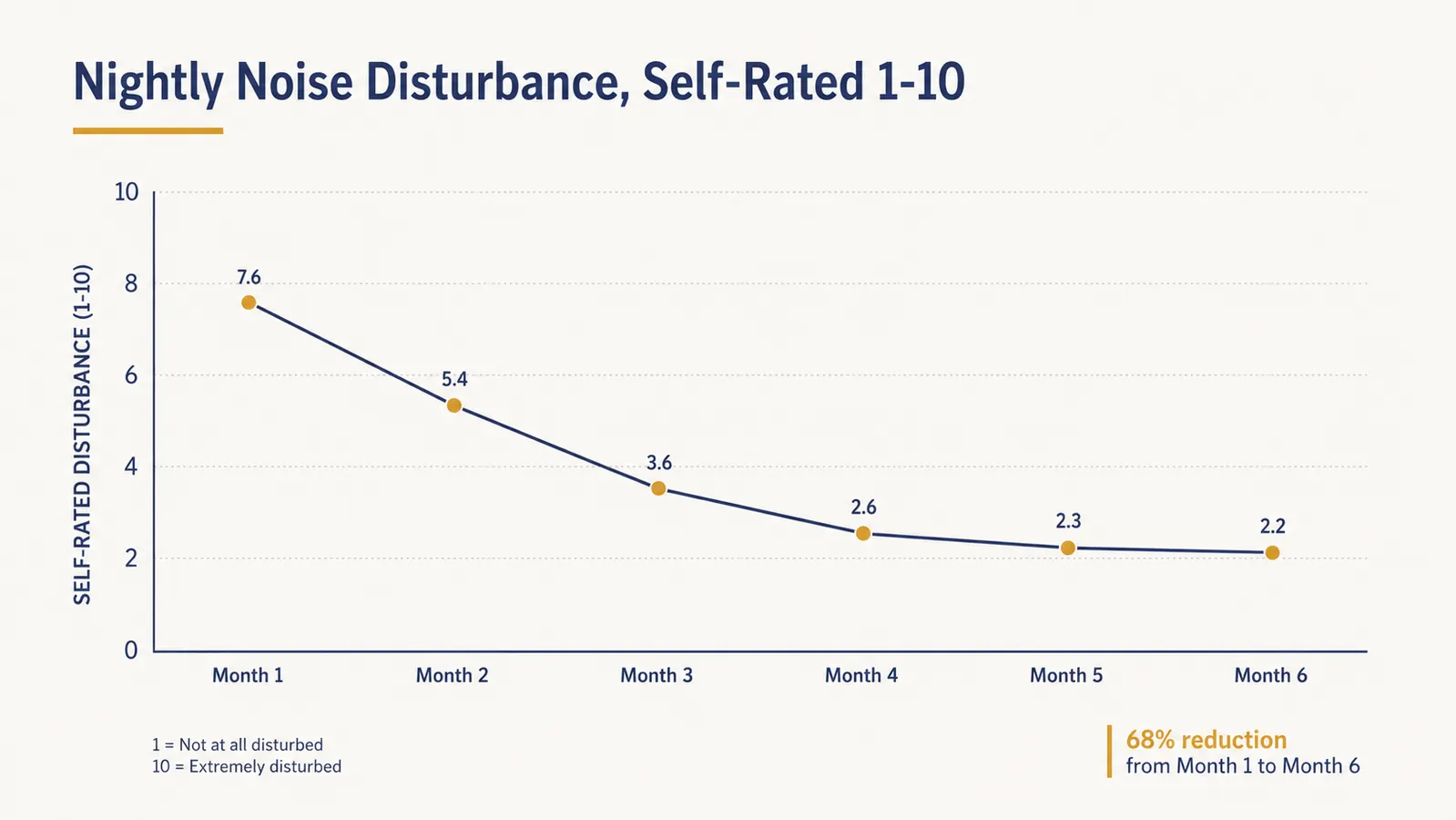
Before this test, my nights had a predictable shape: fall asleep fine, wake up somewhere between 1 and 3 a.m. when the street noise or the dog next door hit a certain volume, then lie there annoyed for twenty to forty minutes before drifting back off. That pattern basically disappeared within the first two weeks and has stayed gone for the rest of the six months, which is the single biggest change I can point to.
Flents lists an NRR of 33 on the package, which is the manufacturer's own lab-tested rating and not something I can verify with a decibel meter in my bedroom. What I can tell you is what it's like in practice: traffic and a barking dog go from an alarming, sleep-breaking sound to a distant murmur I have to actively listen for to even notice. A partner's occasional snoring goes from something that used to wake me to background texture I genuinely stop registering within a few minutes. Sudden sharp sounds, like a door closing hard or a phone buzzing on the nightstand, still get through at a reduced but noticeable volume, which honestly feels safer than total silence.
If you've never worn a nightly pair of plugs and you're trying to picture the actual before-and-after, the reasons a lot of people finally commit to sleeping with ear plugs line up almost exactly with what changed for me: fewer 2 a.m. wake-ups, less time spent lying awake annoyed, and a bedroom that just feels calmer even during the parts of the night I'm not consciously listening to anything.
What I Stopped Noticing, and What I Still Notice
Somewhere around week three, I stopped consciously feeling the plugs going in. Rolling and inserting a fresh pair became as automatic as brushing my teeth, and I genuinely don't register the pressure anymore unless I think about it. That habituation is real and it's one of the underrated benefits of sticking with one product long enough instead of switching around every few weeks trying to find something perfect.
What I still notice, six months in, is the tiny window right after insertion before the foam has fully expanded, where the seal is incomplete and a bit of sound leaks through. It's maybe fifteen to thirty seconds, and it's just physics, not a flaw specific to Flents, but it's the one moment in the routine that never fully disappeared. I also still notice, occasionally, that a plug has worked slightly loose by morning if I was a particularly restless sleeper the night before, which tells me the compression fit is good but not indestructible against a full night of tossing.
For anyone weighing foam against a completely different approach, like wearing something over the ears instead of in them, I put together a full breakdown of how foam ear plugs compare to noise cancelling headphones for sleep after living with both for a stretch. The short version is that foam wins on comfort for side sleepers and headphones win on active sound masking, but this review is specifically about how the Flents plugs held up as a long-term nightly habit, and on that measure they've earned their spot on my nightstand.
What I Liked
- Foam still recovers its shape and seal after months of nightly compression, as long as you replace pairs on a regular cadence
- Comfortable enough for side sleeping without pushing painfully into the ear against a pillow
- Cheap enough that replacing a pair every two to three nights never feels wasteful
- Reduces the kind of mid-night noise wake-ups that used to break my sleep several nights a week
- The contour shape stays in place through a normal amount of tossing and turning
Where It Falls Short
- A single pair only holds up well for two to three nights before it starts losing some bounce and grip
- There's a short window right after insertion where the seal isn't complete yet
- Occasionally works slightly loose by morning on unusually restless nights
- Not a fit for anyone who finds any in-ear pressure uncomfortable, foam or otherwise
The plugs themselves didn't change much after month one. What changed was me: I stopped thinking about them, which is the whole point of a long-term product actually working.

Who This Is For
This is a good fit for anyone dealing with a steady, low-to-moderate noise problem: a partner's snoring, street sounds, an apartment with thin walls, or a schedule that has you trying to sleep at hours when the rest of the world is awake. It's also a sensible pick for side sleepers specifically, since the low-profile foam doesn't create the pressure point that bulkier plugs can when your ear is against the pillow most of the night. If you like the idea of a plug you barely think about once it's part of your routine, Flents earned that role in my bedroom over six months of daily use. It also suits anyone who travels for work or visits unfamiliar places often, since a pack of these takes up almost no room in a bag and doesn't rely on batteries or a charging cable to keep working.
Who Should Skip It
If you've never tolerated anything in your ear canal, even briefly, foam plugs of any brand are probably not going to convert you, and no amount of long-term testing changes that starting point. Anyone who needs to hear an alarm, a baby monitor, or someone calling for them overnight should be cautious here too, since the reduction in sound, while not total silence, is real and consistent. And if the idea of replacing a pair every couple of nights feels like more maintenance than you want to think about, an over-the-ear option might suit your habits better than anything foam.
Six months later, these are still the pair on my nightstand.
That's not a hard endorsement to make about most products after this long. If a noisy street, a snoring partner, or a thin apartment wall keeps waking you up, Flents foam plugs are a low-cost way to find out whether the problem is fixable.
Amazon Check Today's Price on Amazon →